
Affiliate Program
The Fibershed Affiliate Program supports an international grassroots network that promotes the development of regional fiber systems communities, including economic and non-economic growth, in the form of building relationships and new global networks.
Where is fiber grown & raised in your community? How is fabric made, and who sews, knits, or makes clothing?
Exploring these questions presents the opportunity to get to know your fibershed — the geographical landscape that defines and gives boundaries to a natural textile resource base. Awareness of this bioregional designation engenders appreciation, connectivity, and sensitivity for the life-giving resources within our homelands.
> Find a Fibershed Affiliate in your region here.
Read on to learn more about the Fibershed Affiliate Network and how to form a Fibershed Affiliate.
(at left, flax grows in a western Wisconsin field, part of the Three Rivers Fibershed. Photo by Andrea Myklebust.)
Fibershed Affiliate Projects
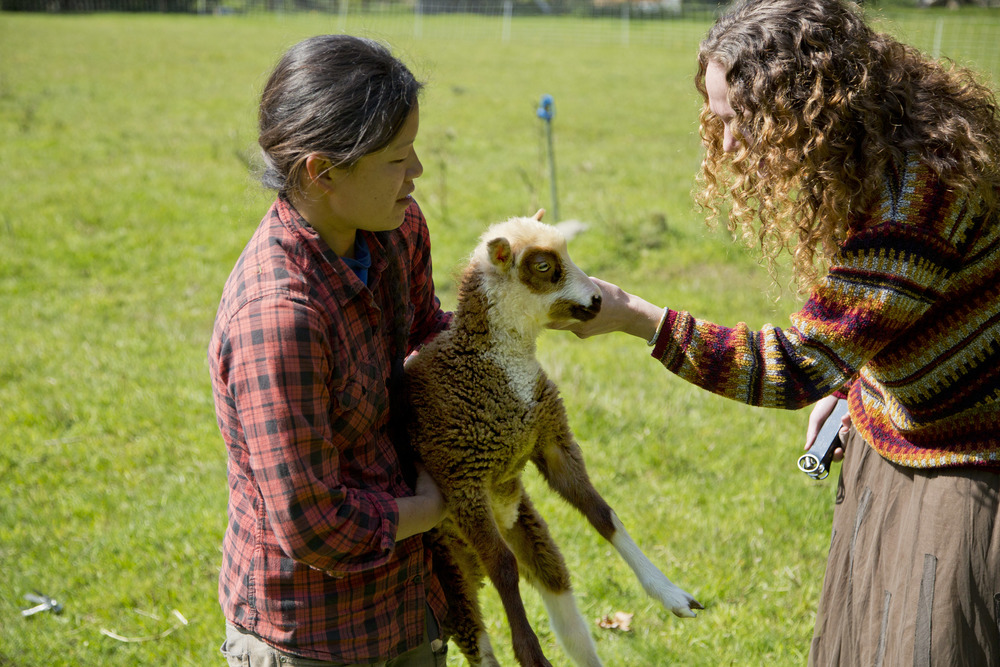
Fibershed Affiliates are grounded in place-based community organizing efforts that work to connect fiber farmers, processors and artisans. Fibershed offers Affiliate members ways to share knowledge, collaborate on solution-oriented projects, build community, and enhance their organizing efforts, through online meetups, educational webinars, trainings, networking, Working Groups, and project feedback.
> Explore the Fibershed Affiliate network through our Threading Resilience Zine.
From design challenges to community education projects, the Fibershed Affiliate network includes over 70 groups worldwide with a diverse array of interests and a shared goal of strengthening regional fiber systems.
Examples of these efforts include:
- Connecting designers and makers with local materials and landscapes through Design Challenges, like Rust Belt’s One Year, One Outfit Project and Chesapeake Fibershed’s Sustainable Cloth Challenge.
- Developing educational curriculum to connect students and their families with circular, soil-to-soil textile systems, like Fibershed Nederland.
- Organizing a Carbon Farming Network and Co-op, which the New York Fibershed Affiliate has done by connecting fiber producers to land stewardship guidance to restore ecosystem health, and growing local supply chains with Climate Beneficial™ verified fiber.
- Creating a community cloth prototypes — grown, made, and celebrated within your bioregion: the Western Mass Fibershed local cloth initiative and Bristol Cloth Project (within the South West England Fibreshed) are two examples.
- Developing fiber systems research projects to better understand and foster local fiber and dye production — for example, the Acadiana Fibershed is focused on reviving Acadian Brown Cotton, and the Rust Belt Fibershed is exploring the viability of local flax for linen, and the abundance of alpaca fiber, while the Prakriti Fibershed is piloting a cotton system that regenerates soil health with traditional farming methods
- Mapping local supply chains and developing Regional Fiber Sourcebooks — like that of the Southern California Fibershed — to showcase the natural fiber in their regions.
Micro-Grant Program
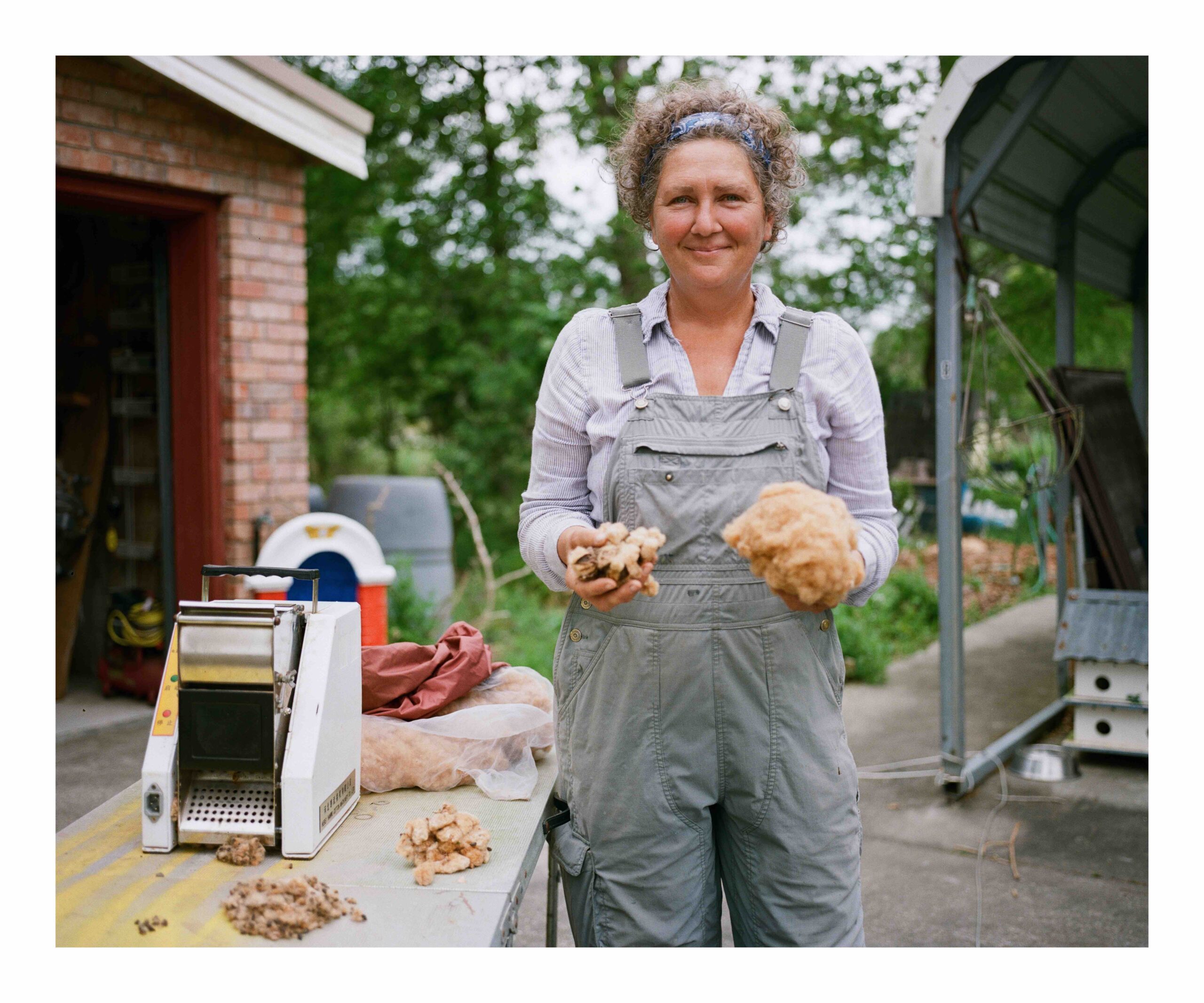
Each year through Fibershed’s Affiliate Program, Fibershed develops a pool of funding through the Affiliate Micro-grant program to support the Fibershed Affiliate Network in developing and implementing place-based community activities, research, prototyping, educational events, and other resource development to serve their communities and vision.
We’re honored to have funded and supported so many impactful projects worldwide through these $4,500 individual Micro-grants. Projects have included an initiative to design a reciprocal textile program in Fibreshed Ireland, a natural dye wastewater field trial in Southeast New England, prototyping small-scale fiber processing machinery to uplift local small farmers, and so many more. Since 2017, Fibershed has supported over 83 projects — totaling more than $231,000 of funding. Thank you to all of our supporters for helping us fund 17 projects for our 2023-2024 Micro-grant season.
> Read about recently funded projects here.
Joining the Fibershed Affiliate Network
Forming a Fibershed Affiliate typically begins by connecting with nearby Fibershed Affiliates to learn more about what’s happening in your broader region, and developing a preliminary vision for your regional fiber and dye system, which can mean identifying a key challenge or resource in your community, or a specific project to support your community. The membership process begins with submitting a Fibershed Affiliate Membership Application (linked below). New Fibershed Affiliate members typically establish an online and on-the-ground presence for their fibershed by reaching out to local community members and organizations across the “Soil to Soil” cycle: this may include fiber animal or breed groups, textile and fiber arts guilds, land stewardship organizations, educational institutions.
Fibershed offers Affiliate members:
- Placement in the Fibershed Affiliate Directory
- Access to the Fibershed Affiliate Resource page
- Opportunities for cross-promotion of local Fibershed Affiliate activities through our events calendar, newsletter, and social media
- Monthly virtual meetings with fellow Fibershed Affiliate organizers to discuss projects, challenges, and share strategies, resources, and inspiration
- Regular educational webinars, content and resources on topics related to Fibershed’s mission — from Fundraising for Fiber Systems, to Working with Brands, to Mapping Fiber Supply Chains
- Annual opportunities to fund activities and projects through our Micro-grants initiative
- Access to a customized website template to set up a Fibershed Affiliate site with a Producer Directory, Blog, Events calendar, and Project pages
Are you interested in forming a Fibershed Affiliate?
We are currently not accepting new applications due to our limited capacity. Please check back soon.
- There is no cost to join or be part of the Fibershed Affiliate Network
- Fibershed Affiliates are place-based groups that can be organized by 1 or more individuals. Many Fibershed Affiliates find sustaining success by working as a committee or small group to cover essential activities and community outreach
- Fibershed Affiliate organizers are drawn from a range of backgrounds
- While the activities and vision of a Fibershed Affiliate may align with an existing business entity, a Fibershed Affiliate is a regional group to promote many businesses and resources in the community. Forming a Fibershed Affiliate is not a tool for the singular promotion or enhancement of a business or individual.
In the meantime, if you’re looking to get moving with your goals and activities, we encourage you to:
- Continue efforts in your home community, like outreach to local producers or others who are interested in forming a Fibershed Affiliate with you.
- Brainstorm and draft any public-facing materials that will support the launch of your Fibershed Affiliate, like a mission statement, descriptive information about your geography and vision, and even visual assets like photos of local fiber, dye, and skills.
- Check out what other Fibershed Affiliates are doing by following them on social media (searching “Fibershed” or “Fibreshed” on Instagram or Facebook is a good place to start), listening to our podcast, or reading Affiliate directory pages, and reflect on what approaches and projects might make the most sense in your home community.
Recent Stories